Zero Proof, Full Culture: Inside America's Sober-Curious Movement and What It Means for Recovery
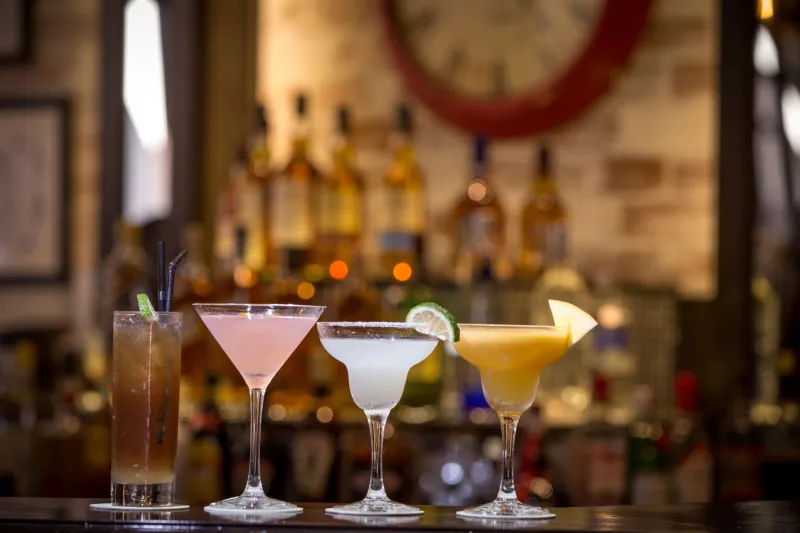
Walk into a bar in Austin, Brooklyn, or Portland these days and you might spot something that would have been unthinkable a decade ago: a full menu of non-alcoholic spirits, botanically infused mocktails, and hop water on tap. The bottle behind the bar might read 'Gnista,' 'Ritual Zero Proof,' or 'Athletic Brewing' — and the person ordering it might be 24 years old, entirely sober, or simply curious.
Welcome to the sober-curious movement, one of the most significant shifts in American drinking culture in generations. For people in recovery — and for those quietly wondering whether alcohol has too great a hold on them — this cultural moment carries both opportunity and a subtle risk worth understanding.
A Generation That's Opting Out
The numbers tell a striking story. According to Gallup's long-running polling, the percentage of American adults who report drinking has been drifting downward, and the decline is sharpest among adults under 35. Studies from the National Institutes of Health and academic surveys alike have documented that Gen Z drinks at notably lower rates than millennials and Gen X did at the same age — and a meaningful share reports drinking not at all.
The reasons are varied and, frankly, practical. Many younger Americans cite health and mental wellness. Others point to finances in an economy where a round of cocktails can easily top $60. Still others describe a cultural reframing: alcohol is no longer a default social lubricant but a choice to be evaluated, like diet or exercise. Social media has amplified this shift, with hashtags around sobriety, 'recoveryTok,' and influencers documenting alcohol-free living to audiences in the millions.
From Dry January to a Year-Round Economy
The movement's most visible ritual is Dry January, the month-long abstention challenge that originated with the UK charity Alcohol Change UK and took firm root in the United States by the mid-2010s. What began as a New Year's reset has matured into a national institution — an estimated one in five adults of legal drinking age has participated in some form, per surveys from research firms tracking the trend.
Crucially, the market responded. Zero-proof spirits now occupy shelf space at Total Wine and Whole Foods. Sober bars and 'temperance taverns' have opened in cities from San Diego to Washington, D.C. Even mainstream breweries have launched non-alcoholic lines. What was once a niche of grape juice and seltzer has become a genuine industry, projected by analysts to grow into the billions of dollars domestically.
The Opportunity: Lowering the Stakes of the Conversation
For the recovery community, this shift has real benefits. When abstaining from alcohol no longer requires an explanation at a dinner party, one of recovery's most persistent social barriers shrinks. The rising normalcy of ordering a mocktail means that choosing not to drink draws less scrutiny — a small but meaningful reduction in the social pressure that can accompany early sobriety.
There's also an awareness dividend. As sober-curious content floods social feeds, more Americans are encountering honest conversations about alcohol's effects on sleep, anxiety, and long-term health. For someone whose relationship with drinking has quietly troubled them, a Dry January challenge can sometimes be the first safe opening to reflect — and, occasionally, the first step toward seeking help.
The Caution: When a Trend Masks a Problem
But the movement's framing carries a hazard that deserves honest attention. Sober-curious culture tends to present abstinence as a lifestyle optimization — a wellness choice alongside spin classes and supplements. For the vast majority of participants, that's exactly what it is. For a smaller group, however, 'I'm just doing Dry January' can become cover for something more serious.
Addiction specialists note a consistent pattern: alcohol use disorder is defined not by how often someone drinks, but by what happens when they try to stop. Warning signs include:
- Failed or abandoned attempts to cut back, including prior Dry January attempts that collapsed within days
- Physical withdrawal symptoms — tremors, sweating, insomnia, irritability — when not drinking
- Escalating consumption in the weeks before an abstention period, sometimes called 'stocking up'
- Secrecy, defensiveness, or anxiety when friends or family ask about drinking
- A sense that alcohol has become necessary to relax, socialize, or feel normal
If any of these sound familiar, the issue isn't discipline or trend-following — it may be dependence, which is a medical condition, not a character flaw. The encouraging news is that effective, evidence-based treatments exist, from medication-assisted options like naltrexone to counseling and mutual-support communities. SAMHSA's national helpline (1-800-662-4357) remains a free, confidential starting point, available 24/7.
Finding Your Place on the Spectrum
It may help to think of people's relationships with alcohol as a spectrum rather than a binary. On one end sits the genuine sober-curious participant: someone without signs of dependence who finds that skipping alcohol improves their sleep, budget, or weekends. In the middle are people whose drinking causes friction they'd rather not examine — a group for whom structured self-assessment, ideally with a physician or counselor, is worthwhile. On the other end are those for whom alcohol has become a medical necessity to address, where cutting back alone may be unsafe and professional support is essential.
One important clinical note: people who drink heavily and regularly should never stop abruptly without medical guidance. Alcohol withdrawal can be dangerous — in severe cases, life-threatening — and supervised detox is the safest route.
A Culture Worth Watching
Whatever one's relationship with alcohol, the sober-curious movement represents something genuinely new in American life: a mainstream willingness to question a substance that has long gone unexamined. For some, it's a fun experiment. For others, it's an on-ramp to recovery. And for the millions already sober, it's a long-overdue widening of the door.
If you're reading this because alcohol has been on your mind — whether for a month or for years — that reflection itself is worth honoring. Culture can start the conversation, but you don't have to finish it alone.