Finding Your People: 5 Recovery Community Models That Can Support Your Sobriety

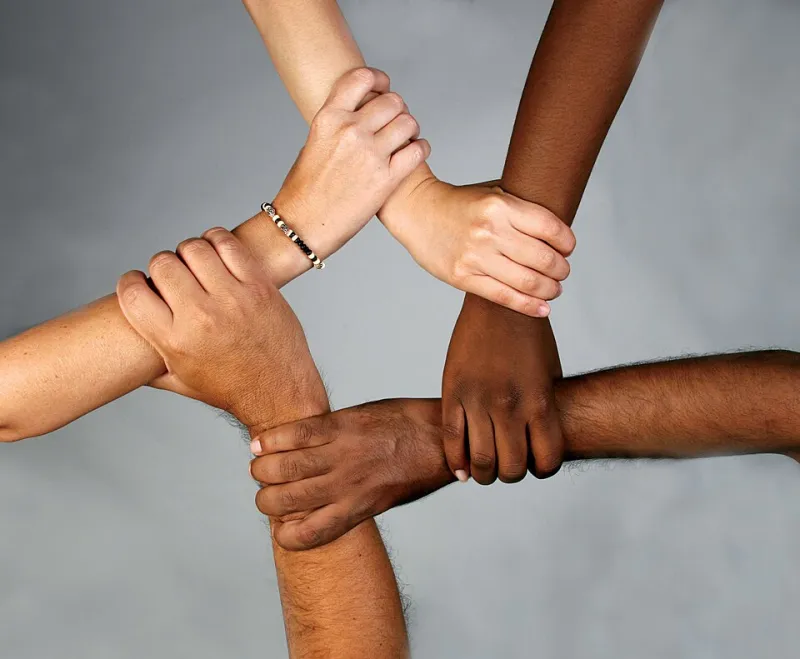
Photo: Ganesh Mohan T, CC BY-SA 4.0, via Wikimedia Commons
Early recovery can feel profoundly lonely. The social world that once revolved around substance use has been set aside, and the path forward can seem unclear and isolating. Yet decades of research consistently point to the same conclusion: connection is not a nice-to-have in recovery — it is a clinical necessity. A landmark study published in PLOS Medicine found that social isolation is associated with a 29% increased risk of relapse, while strong peer support networks significantly improve long-term outcomes.
The good news is that the American recovery landscape has never been more diverse. Whether you find meaning in structured spiritual fellowship, evidence-based group work, or the quiet solidarity of an online forum at 2 a.m., there is a community built for someone like you. The challenge is knowing where to look — and what questions to ask before you commit.
Here are five recovery community models worth exploring, along with honest guidance on who tends to thrive in each.
1. 12-Step Programs: Structure, Sponsorship, and Spiritual Framework
Best for: People who value routine, mentorship, and a spiritual (though not strictly religious) framework.
Alcoholics Anonymous, founded in 1935, pioneered the peer-support model for addiction recovery. Today, the 12-step family includes Narcotics Anonymous (NA), Cocaine Anonymous (CA), Al-Anon (for family members), and dozens of other specialized fellowships — with an estimated two million members attending meetings across the United States each week.
The 12-step model centers on a set of guiding principles, regular group meetings, personal inventory work, and the sponsor relationship — a one-on-one mentorship pairing that provides accountability and lived experience. The spiritual dimension, often described as a belief in a "Higher Power," is intentionally broad; many members interpret it in entirely secular terms.
What to consider: 12-step programs work exceptionally well for people who respond to community ritual, clear structure, and the depth of long-term relationships. If a religious or quasi-spiritual framing creates significant discomfort, however, other models may be a better starting point. Meetings vary widely in tone and culture — attending several different groups before drawing conclusions is always advisable.
2. SMART Recovery: Science-Based, Self-Directed, and Secular
Best for: People who prefer a cognitive, evidence-based approach without spiritual components.
SMART Recovery (Self-Management and Recovery Training) was developed in the 1990s as a secular alternative to 12-step programming. Grounded in Cognitive Behavioral Therapy (CBT) and motivational interviewing, SMART uses a four-point framework: building and maintaining motivation, coping with urges, managing thoughts and behaviors, and living a balanced life.
Meetings — available both in-person and online — are facilitated rather than led by a sponsor, and the program encourages members to "graduate" when they feel ready, rather than committing to lifelong attendance. The approach treats addiction as a behavior that can be modified through skill-building rather than a disease requiring ongoing surrender.
What to consider: SMART tends to resonate strongly with individuals who are analytically minded, skeptical of spiritual frameworks, or who have had mixed experiences with 12-step culture. The online meeting infrastructure is particularly robust, making it accessible for people in rural areas or those with demanding schedules.
3. Faith-Based Recovery Communities: Integrating Spirituality and Sobriety
Best for: People for whom religious faith is a central source of meaning and community.
For many Americans, spiritual belief is not peripheral to identity — it is foundational. Faith-based recovery programs recognize this and build their support structures accordingly. Celebrate Recovery, one of the largest faith-based programs in the country, operates through more than 35,000 church locations and uses a Christ-centered framework alongside the 12-step model. Other programs draw from Jewish, Muslim, Buddhist, and other religious traditions.
These communities offer something distinct from secular recovery groups: the integration of sobriety into an existing faith life, access to pastoral counseling, and the social infrastructure of a congregation. For individuals whose substance use created a rupture with their faith community, these programs can also serve as a pathway back.
What to consider: Faith-based programs are most effective when there is genuine alignment between a participant's beliefs and the program's theological framework. Attending a program whose doctrine conflicts with your own values can create additional stress rather than support. When exploring options, look for programs that welcome questions and do not pressure participants on doctrinal matters.
4. Online and App-Based Recovery Communities: Connection Without Geographic Limits
Best for: People in rural areas, those with mobility limitations, or individuals who need support outside traditional meeting hours.
The digital recovery landscape has expanded dramatically — a shift accelerated by the COVID-19 pandemic, which forced much of the recovery community online and, in doing so, demonstrated that virtual connection could be genuinely meaningful. Platforms such as In The Rooms, Sober Grid, and the online meeting directories maintained by both AA and SMART Recovery offer round-the-clock access to peer support from anywhere in the country.
For individuals in early recovery who may not yet feel ready for in-person vulnerability, online communities can serve as a lower-barrier entry point. They also provide a critical safety net during evenings, weekends, or holidays — times when cravings tend to intensify and in-person resources may be unavailable.
What to consider: Online communities work best as a complement to, rather than a complete replacement for, in-person connection. Research suggests that face-to-face interaction produces stronger social bonding and accountability. Use digital platforms to bridge gaps, but continue building toward embodied community when circumstances allow.
5. Therapy-Based and Professionally Facilitated Groups: Clinical Support in a Community Setting
Best for: People with co-occurring mental health conditions or those who want professional guidance alongside peer support.
Therapy groups — including Dialectical Behavior Therapy (DBT) skills groups, trauma-informed process groups, and Intensive Outpatient Programs (IOPs) — blend clinical structure with the relational benefits of community. Led by licensed counselors or therapists, these groups address the psychological roots of substance use alongside practical recovery skills.
Many IOPs in the United States now offer evening and weekend scheduling to accommodate working adults, and telehealth options have made therapy-based groups accessible in regions where specialized providers are scarce. SAMHSA's treatment locator (findtreatment.gov) can help identify programs in your area that accept Medicaid, Medicare, or private insurance.
What to consider: Therapy-based groups typically require a clinical intake process and may involve insurance verification. They are especially well-suited for individuals managing PTSD, depression, anxiety, or other co-occurring conditions alongside substance use. If you have tried peer-only models and found them insufficient, adding a professionally facilitated group to your recovery plan is worth exploring.
How to Choose — and What to Do If the First Fit Isn't Right
There is no single community model that works for everyone, and the most important thing you can do is give yourself permission to explore. Attend a few different meetings. Try an online group. Speak with a counselor about what your specific needs might require. Recovery is not a one-size-fits-all process — it is a deeply personal journey that often benefits from combining elements of several different approaches.
If a community feels unwelcoming, judgmental, or misaligned with your values, that is not a sign that community-based recovery is wrong for you. It is a sign to keep looking. Your people are out there.
Need help finding recovery support in your area? Contact SAMHSA's National Helpline at 1-800-662-4357 — free, confidential, and available 24 hours a day, 365 days a year.