The Quiet Witnesses: How Pets Carry Us Through Addiction and Into Recovery
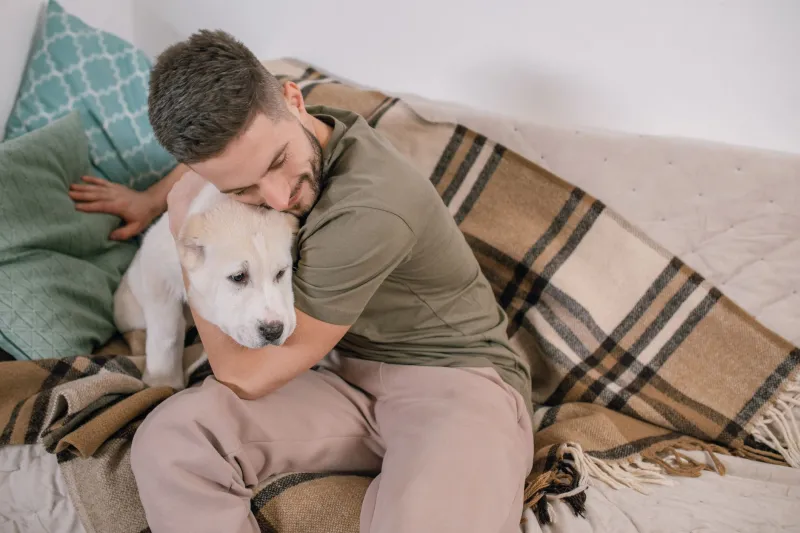
Ask anyone in long-term recovery about the people who stood by them, and you will usually hear a familiar list: a sponsor, a sibling, a partner who refused to give up. But press a little deeper, and another figure often surfaces — one with four legs, a wagging tail, or a quiet purr.
Pets occupy a strange and tender place in the story of addiction. They see everything. They endure the missed feedings, the empty apartments, the tension in the air. And yet they remain. For many people, that loyalty becomes a turning point — proof that they are still capable of being loved, and still needed.
The Ones Who Stayed
Active addiction narrows a person's world to a single focus. In that narrowed world, pets are frequently the first to feel the neglect. Walks get skipped. Food bowls sit empty. The dog that once slept at the foot of the bed gets locked outside, or worse, watches from across the room as a person becomes someone unrecognizable.
This is where a particular kind of guilt takes root. Unlike the harm done to family members — which can at least be discussed, apologized for, negotiated — the harm done to a pet is silent. The dog cannot say "you hurt me." The cat cannot demand an explanation. People in recovery often describe this unspoken witness as one of the sharpest sources of shame they carry into sobriety.
And yet that same silence can become a bridge. Animals do not keep score the way people do. The dog that was walked at irregular hours does not bring it up at Thanksgiving dinner. Recovery, for many, begins with the simple act of filling a food bowl on time — a small, doable act of repair.
Why Responsibility Heals
Early recovery is, in many ways, a crisis of structure. The rhythms that addiction imposed — chaotic, consuming, urgent — vanish overnight, and the days stretch out, unshaped and dangerous. Boredom and aimlessness are well-documented relapse risks.
A pet is a schedule you cannot argue with. The dog needs a walk at 7 a.m. The cat needs breakfast. The aquarium needs its water tested. These obligations are small, but they are non-negotiable, and they rebuild something addiction dismantled: the habit of showing up for someone else, consistently, even on the days when motivation is nowhere to be found.
There is also the matter of being needed. Depression and shame frequently tell people in early recovery that they are a burden, that the people around them would be better off without them. A pet punctures that lie. Someone in the house is genuinely, physically dependent on you — and thriving because of it. Behavioral researchers have long noted that caring for another living thing strengthens self-efficacy, the quiet belief that your actions matter. In recovery, that belief is everything.
The Science of the Leash
The bond between humans and animals is not merely sentimental. Studies of human-animal interaction have documented measurable drops in cortisol, the body's primary stress hormone, alongside increases in oxytocin — the same neurochemical associated with bonding and trust. For a nervous system recalibrating after substance use, these effects are not trivial. Cravings often spike during moments of acute stress, and a dog's steady presence can interrupt that spiral in ways that willpower alone cannot.
This is why animal-assisted therapy has moved from fringe to mainstream. Residential treatment centers across the country now incorporate equine therapy programs, where clients groom, feed, and work with horses, and outpatient programs that bring therapy dogs into group sessions. The horse does not ask about your criminal record. The dog does not flinch at your past. For people who have spent years expecting judgment from every human interaction, that neutrality can unlock honesty that talk therapy struggles to reach.
Pets and Sober Housing: A Practical Hurdle
There is a hard truth worth naming: many people lose access to their animals during addiction — through eviction, family intervention, or surrender to a shelter. Reuniting with a pet can be a meaningful recovery milestone, but it is also a logistical challenge.
Sober living homes have historically banned pets, and while that remains common, the landscape is shifting. A growing number of recovery residences in states like California, Colorado, and Florida now permit animals, recognizing that the responsibility and emotional grounding a pet provides can actively support sobriety. Anyone searching for housing should ask directly about pet policies, and organizations like local humane societies sometimes offer temporary foster care for people entering treatment — an option worth exploring rather than surrendering an animal permanently.
If you are planning treatment and have a pet, build the plan early: identify a foster, a family member, or a pet-friendly program. The goal is a reunion, not a goodbye.
A Support System With Fur
Recovery literature talks a great deal about support systems — the people, meetings, and professionals that surround a person in sobriety. It may be time to widen that definition. A pet is not a sponsor, and caring for an animal is not a substitute for treatment, therapy, or community. But as one piece of a larger foundation, the role is genuine and profound.
The animal that watched you at your worst becomes the witness to your best: the morning walks, the steady feeding schedule, the nights you came home sober and on time. In that daily, wordless accounting, many people in recovery find something they did not expect — a relationship that never doubted they could change, and a living reminder, every single day, of why they did.
If you or someone you love is struggling with substance use, help is available. Call the SAMHSA National Helpline at 1-800-662-4357 for free, confidential support, 24 hours a day.