When Retirement Becomes the Casino's Business Model: Recognizing Gambling Addiction in Older Adults
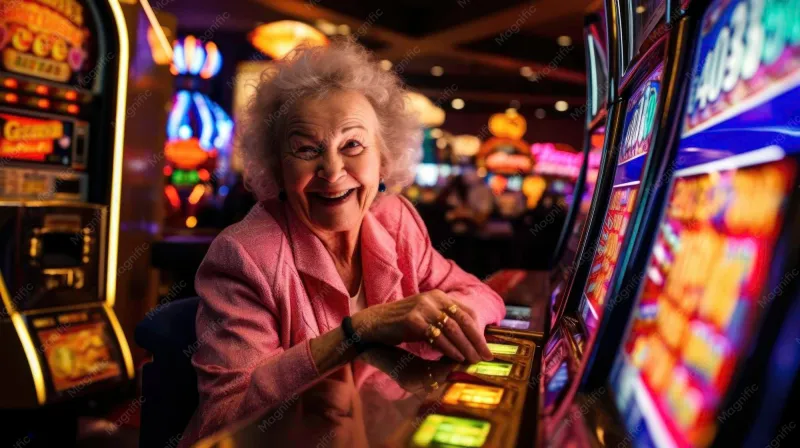
Photo: elderly woman slot machine casino senior, via img.freepik.com
The marketing is remarkably effective. A complimentary shuttle arrives at the senior living community every Tuesday morning. Inside the casino, patrons over 65 receive discounted meals, free slot play, and something rarer still: a room full of people, lights, and noise. For a retiree spending long days alone, the offer isn't really about gambling. It's about belonging. And that is precisely why late-life gambling disorder has become one of the most overlooked addiction crises in the United States.
A Growing Problem Hiding in Plain Sight
Research consistently shows that adults over 65 represent the fastest-growing demographic of problem gamblers in the country. Unlike younger gamblers, older adults often have accumulated assets—a pension, a 401(k), a paid-off home—that can quietly absorb years of losses before anyone notices. There are no late nights at the track, no obvious behavioral telltale. A grandmother who once filled her afternoons with crosswords and daytime television is simply... out of the house. Again.
Compounding the problem, many seniors grew up in an era when gambling carried a heavy moral stigma, making them less likely to disclose the behavior and more likely to hide losses out of shame. Adult children, meanwhile, often view a parent's casino trips as harmless entertainment—a social outing, a cheap buffet, a bit of fun. That assumption can cost families everything.
How Gambling Rewires an Aging Brain
Gambling disorder is not a failure of character; it is a measurable disruption in the brain's reward circuitry. Slot machines and video poker are engineered around variable-ratio reinforcement—the same intermittent reward schedule that makes them, in clinical literature, among the most addictive delivery systems ever designed.
Aging introduces vulnerabilities that younger brains don't share. Diminished dopamine receptor density means older adults may experience wins as more intensely rewarding while feeling losses less acutely in the moment. Cognitive changes can impair the ability to track losses over a session or calculate cumulative damage across months. And life transitions—widowhood, retirement, the loss of a spouse's daily companionship—create the kind of emotional vacuum that gambling venues are explicitly designed to fill.
Grief deserves particular attention. Studies of older problem gamblers repeatedly identify the death of a spouse as a common precipitating event. The casino becomes a place where someone knows your name, remembers your birthday, and hands you a free drink. The machines, for a few hours, quiet the silence of an empty house.
Warning Signs Families Routinely Miss
Because older adults manage finances independently and often control significant assets, the red flags look different than they do with younger gamblers:
- Unexplained withdrawals or transfers from savings, especially recurring cash withdrawals in casino-adjacent amounts
- A sudden shift in routine, with the parent frequently out of the house for long, vague stretches
- Defensiveness about money, or a parent who once discussed finances openly becoming evasive
- Unpaid bills or lapsed insurance despite adequate income
- Borrowing from adult children or friends for reasons that never quite add up
- New secrecy around a phone or mail, including credit card statements
- Mood shifts—irritability when plans interfere with casino days, low mood on days without an outing
One of the most dangerous patterns is the "chasing" loop: after a significant loss, an older gambler may liquidate a CD, take a reverse mortgage, or drain a life insurance policy to win it back, believing—often correctly—that no one is watching.
What Adult Children Can Actually Do
Approach the situation the way you would any serious health concern: with facts, compassion, and urgency.
Start with a conversation, not an intervention. Ask open questions about how they spend their days and what the casino outings look like. Shame drives secrecy; curiosity opens doors. Avoid framing it as a moral failing.
Bring in the primary care physician. Older adults often accept a medical framing more readily than a psychiatric one. Physicians can screen for gambling disorder, depression, and anxiety, and can document concerns.
Address the isolation underneath. Gambling filled a void; recovery requires something to fill it. Senior centers, faith communities, volunteer programs, and grief support groups offer genuine connection without a house edge.
Protect the assets. With a parent's cooperation—or through legal tools like a durable power of attorney, trusted contact designations on financial accounts, or self-exclusion programs offered by most state-licensed casinos—families can create structural barriers. Self-exclusion, in particular, is an underused resource: the gambler signs a voluntary ban, and casinos are legally obligated to enforce it.
Find specialized treatment. The National Problem Gambling Helpline (1-800-GAMBLER) connects callers to certified counselors, many of whom offer telehealth sessions. Gamblers Anonymous meetings exist in most metro areas, and online meetings serve homebound seniors.
Recovery Is Possible at Any Age
There is a persistent myth that older adults are too set in their ways to change. Clinical experience says otherwise. Seniors who enter treatment for gambling disorder often respond well, particularly when treatment addresses the loneliness and grief that fueled the behavior in the first place.
The grandmother at the slot machine isn't chasing a jackpot. She's chasing a Tuesday that doesn't feel empty. Families who understand that—who replace the casino's counterfeit community with the real thing—give their loved ones something no machine ever could: a reason to come home.